Small-space food growing: container gardens for balconies and windows
Quick takeaways
- Choose the right plants. Container-friendly vegetables include lettuce, spinach, cherry tomatoes, radishes, peppers, peas, beans and herbs[1] [2].
- Use appropriate container sizes. Herbs grow in 1-gallon pots, radishes in 2-gallon pots and tomatoes or peppers in 5-gallon pots.
- Provide sunlight and drainage. Plants need at least 4–6 hours of sunlight per day; containers must have drainage holes and quality potting soil[3] [4].
- Start seeds indoors. Sprout seeds in clear cups or small containers before transplanting, especially important given Canada’s shorter growing seasons.
- Harden off plants before moving outside. Gradually expose indoor plants to outdoor conditions to prevent shock from sun, wind and cool nights.
What are the risks and realities of container gardening?
Container gardening won’t replace grocery shopping, but it enhances food security, reduces grocery bills, and provides fresh produce. Containers dry out faster than garden beds, requiring consistent watering. Indoor gardens need sufficient light; without south‑facing windows or grow lights, plants may become leggy. In cold climates, plants must be protected from frost; some may need to be brought indoors. Still, with proper care, container gardens are rewarding and resilient to pests and soil contamination.
What should you do to start container gardening?
What should you do today?
- Assess your space. Identify where you can place containers—balcony, patio, windowsill, or stairwell. Note sunlight exposure and access to water.
- Decide what to grow. Choose vegetables and herbs suited to containers and your climate: lettuce and spinach for cooler seasons; cherry tomatoes, peppers, and herbs for summer.
- Gather containers. Collect pots, buckets, window boxes, or vertical planters. Ensure each has drainage holes and trays to catch excess water.
What should you do this week?
- Obtain seeds and soil. Purchase seeds for your chosen plants and a high‑quality potting soil or seed starting mix. Avoid using garden soil in containers.
- Start seeds indoors. Use clear cups or small containers filled with damp paper towels or seed starter mix; place seeds between the material and keep moist.
- Set up lighting if needed. If you lack bright windows, acquire a grow light and timer; position it 10–15 cm above the seedlings.
- Prepare containers. Clean and disinfect pots; punch or confirm drainage holes; fill with moistened potting soil or compost mix.
What should you do this season?
- Transplant seedlings. Once sprouts have several leaves (3–4 for most plants) and after the last frost, transplant them into their final containers. Bury seedlings at appropriate depth and water gently.
- Provide support. Install trellises or stakes for peas, beans, and tomatoes; these plants need supports to climb.
- Harden off plants. Gradually expose indoor seedlings to outdoor conditions by placing them outside for a few hours each day, increasing time over a week.
- Fertilize and water. Feed plants with balanced, water‑soluble fertilizer every few weeks. Check soil moisture daily; water when the top 2 cm feel dry[5] [6].
- Move or shade as needed. During heat waves, move containers to shade or water more frequently. In northern areas, move pots indoors during cold nights.
- Harvest and replant. Harvest leafy greens continuously by picking outer leaves; succession plant radishes or herbs for continuous supply.
What is the step-by-step plan for container gardening?
- Plan your container garden. Sketch a layout of your balcony or window area, noting sun exposure. Choose plants that suit the available light.
- Choose containers. Opt for pots large enough for root development: 1‑gallon pots for herbs, 2‑gallon for radishes, 5‑gallon for tomatoes and peppers. Use vertical planters or hanging baskets to maximise space.
- Prepare soil. Fill containers with lightweight potting mix rich in organic matter. Add compost if available.
- Start seeds. For peas and beans, sprout seeds in clear plastic cups with damp paper towels. For small seeds (herbs, lettuce), sow directly in seed trays or small pots.
- Transplant seedlings. When seedlings are 3–4 leaves tall, transplant into larger containers. Water thoroughly and keep them in a shaded area for a day to reduce transplant shock.
- Provide support. Install bamboo stakes, trellises, or netting for climbing plants. For tomatoes, use cages or stakes to keep fruit off the ground.
- Water and feed. Water until water runs out of drainage holes; avoid leaving pots standing in water. Fertilize with diluted liquid fertilizer every 2–3 weeks.
- Monitor and adjust. Check daily for pests (aphids, slugs) and remove by hand or with organic controls. Move containers to capture sunlight as the season changes.
- Harvest and succession plant. Harvest herbs by pinching stems above a leaf node; cut lettuces at base to allow regrowth. Plant new seeds every few weeks for continuous harvest.
- Prepare for winter. At season’s end, clean and store containers. Bring perennial herbs indoors or harvest and dry leaves.
What are the key decision points in container gardening?
- Sunlight vs. shade. South‑facing balconies get full sun; choose sun‑loving plants (tomatoes, peppers). North‑facing balconies may suit leafy greens and herbs.
- Indoor vs. outdoor. If you lack outdoor space, grow microgreens or herbs under grow lights. For outdoor containers, choose lightweight pots and secure them against wind.
- Soil vs. hydroponics. Soil is simple and forgiving; hydroponic systems offer faster growth but require monitoring nutrient solutions.
- Seed starting vs. buying seedlings. Starting seeds saves money and offers more variety, but seedlings from nurseries save time.
- Organic vs. conventional. Decide whether to use organic fertilizers and pest control methods; choose products accordingly.
What product families are recommended for container gardening?
Why use container gardening kits?
Why it helps: All‑in‑one kits provide pots, soil, seeds and sometimes support structures, simplifying setup for beginners.
What to look for:
- Kits tailored to your space (window sill, balcony or vertical garden).
- Food‑safe materials and adequate drainage.
- Includes seeds or plant food appropriate for your climate.
Good / Better / Best:
- Good: Basic herb garden kit with small pots and seeds.
- Better: Vegetable kit with larger containers and trellises.
- Best: Modular vertical kit with self‑watering reservoir and multiple planters.
[Affiliate link: Container gardening kits – option A] [Affiliate link: Container gardening kits – option B] [Affiliate link: Container gardening kits – option C]
Why use potting soil and compost?
Why it helps: Provides nutrients and proper drainage for container plants.
What to look for:
- Lightweight potting mix with peat, coco coir or bark.
- Added compost or organic fertiliser for slow release.
- Sterile to prevent pests and diseases.
Good / Better / Best:
- Good: Generic potting soil.
- Better: Organic potting mix with compost.
- Best: Custom mix with perlite, vermiculite and slow‑release fertiliser.
[Affiliate link: Potting soil and compost – option A] [Affiliate link: Potting soil and compost – option B] [Affiliate link: Potting soil and compost – option C]
Why use grow lights?
Why it helps: Provides supplemental light for seedlings and indoor gardens, especially in winter or north‑facing spaces.
What to look for:
- Full‑spectrum LED or fluorescent fixtures.
- Adjustable height and timer settings.
- Energy efficiency and low heat output.
Good / Better / Best:
- Good: Clip‑on LED grow light for small setups.
- Better: Adjustable bar light with timer and multiple brightness levels.
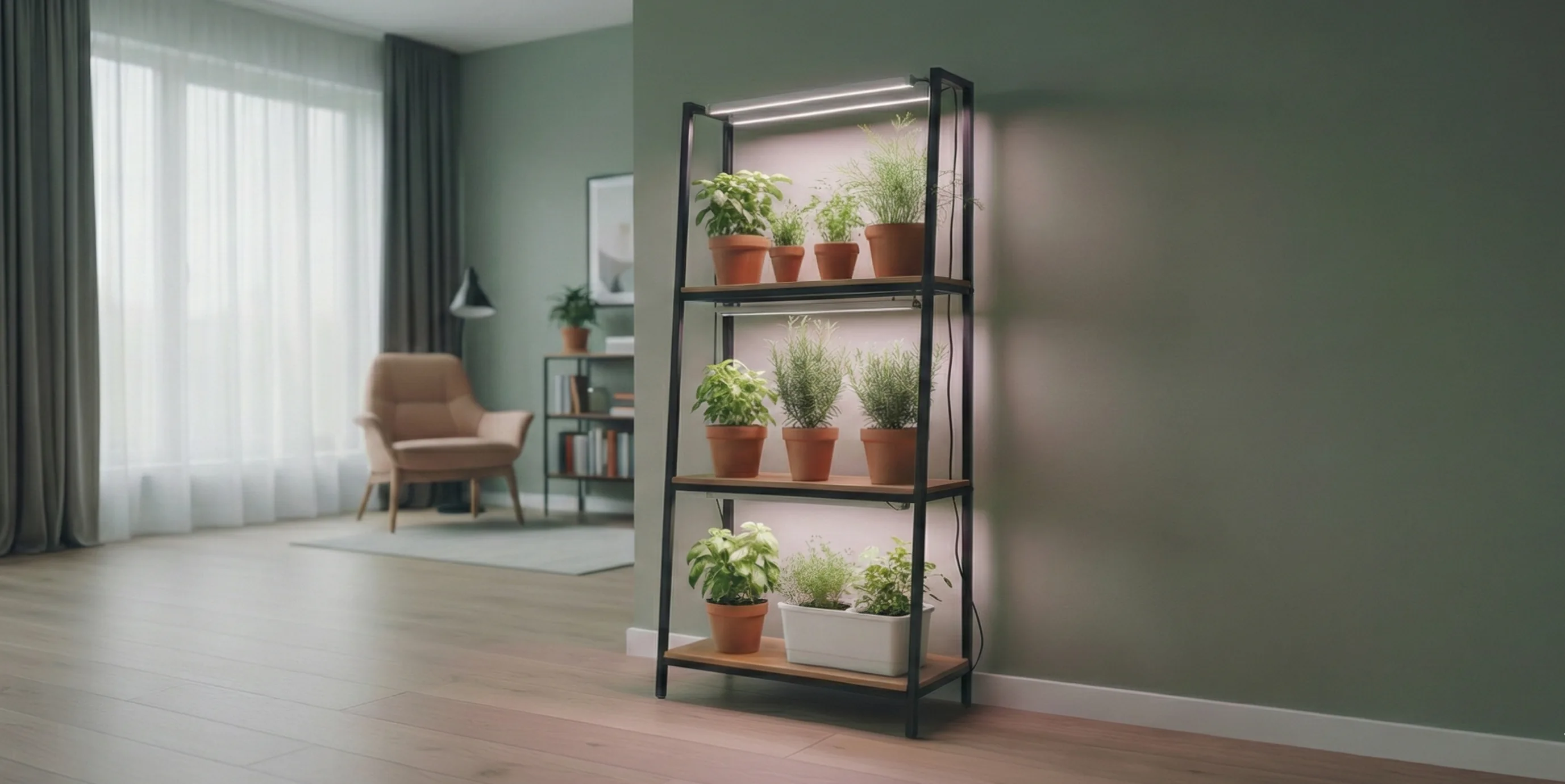
- Best: Multi‑tier stand with integrated lights and shelving.
[Affiliate link: Grow lights – option A] [Affiliate link: Grow lights – option B] [Affiliate link: Grow lights – option C]
Why use seeds and seedling starter kits?
Why it helps: Provides a variety of seeds and supplies to germinate plants successfully.
What to look for:
- Kits with seeds suited to containers (lettuce, herbs, cherry tomatoes, radishes, peppers).
- Germination trays or peat pellets and humidity domes.
- Clear instructions and planting guides.
Good / Better / Best:
- Good: Packet of mixed herb seeds and small tray.
- Better: Seed starter kit with tray, dome and heating mat.
- Best: Deluxe kit with multiple seed varieties, lights and detailed instructions.
[Affiliate link: Seeds and seedling starter kits – option A] [Affiliate link: Seeds and seedling starter kits – option B] [Affiliate link: Seeds and seedling starter kits – option C]
Why use planters and vertical garden systems?
Why it helps: Allows efficient use of vertical or small horizontal space, increasing growing area without taking up floor space.
What to look for:
- Stackable planters, wall‑mounted pockets or tower gardens.
- Sturdy materials (plastic, metal) with drainage trays.
- Weight capacity suitable for soil and plants.
Good / Better / Best:
- Good: Hanging baskets or wall pockets for herbs.
- Better: Stackable tiered planters with irrigation channels.
- Best: Vertical tower garden with self‑watering system and wheels.
[Affiliate link: Planters and vertical garden systems – option A] [Affiliate link: Planters and vertical garden systems – option B] [Affiliate link: Planters and vertical garden systems – option C]
Why use drip irrigation kits?
Why it helps: Delivers water directly to plant roots, conserving water and reducing evaporation.
What to look for:
- Kits designed for containers with adjustable emitters.
- Compatibility with a standard outdoor faucet or rain barrel.
- Timers for automated watering.
Good / Better / Best:
- Good: Simple micro‑drip kit for 4–6 pots.
- Better: Expandable kit with timer and adjustable drippers.
- Best: Smart irrigation system with moisture sensors and app control.
[Affiliate link: Drip irrigation kits – option A] [Affiliate link: Drip irrigation kits – option B] [Affiliate link: Drip irrigation kits – option C]
Why use trellis and support systems?
Why it helps: Provides support for climbing plants like peas, beans and tomatoes.
What to look for:
- Bamboo stakes, metal cages or modular trellis panels.
- Adjustable height and sturdy construction.
- Easy installation and storage.
Good / Better / Best:
- Good: Bamboo stakes tied with twine.
- Better: Metal tomato cages or obelisks.
- Best: Expandable trellis system with clips and adjustable width.
[Affiliate link: Trellis and support systems – option A] [Affiliate link: Trellis and support systems – option B] [Affiliate link: Trellis and support systems – option C]
Why use potting benches?
Why it helps: Provides a dedicated workspace for seeding, transplanting and storing tools.
What to look for:
- Sturdy bench with storage shelves or hooks.
- Weather‑resistant materials (cedar, metal) for outdoor use[7] [8].
- Comfortable height and width.
Good / Better / Best:
- Good: Basic wooden bench with shelf.
- Better: Bench with built‑in sink or soil tub.
- Best: Multi‑tier potting bench with storage cabinet and wheels.
[Affiliate link: Potting benches – option A] [Affiliate link: Potting benches – option B] [Affiliate link: Potting benches – option C]
Why use indoor watering cans?
Why it helps: Allows precise watering of container plants without splashing.
What to look for:
- Narrow spout for controlled flow.
- Comfortable handle and lightweight design.
- Rust‑resistant materials (plastic, stainless steel).
Good / Better / Best:
- Good: Small plastic watering can.
- Better: Stainless‑steel can with long spout and detachable rose.
- Best: Decorative can with ergonomic handle and measurement markings.
[Affiliate link: Indoor watering cans – option A] [Affiliate link: Indoor watering cans – option B] [Affiliate link: Indoor watering cans – option C]
What is the checklist for setting up a small-space garden?
Small‑space garden setup checklist
- Identify sunny locations and measure available space
- Choose container‑friendly plants (lettuce, spinach, cherry tomatoes, radishes, peppers, peas, beans, herbs)
- Gather pots or containers with drainage holes
- Acquire potting soil and compost
- Obtain seeds and seed starting equipment
- Set up grow lights if natural light is insufficient
- Start seeds indoors in clear cups or trays
- Transplant seedlings into appropriate‑size containers after last frost
- Install trellises or stakes for climbing plants
- Water regularly and fertilise as needed
- Harden off plants before moving them outdoors
- Rotate and replant throughout the season
What are common mistakes and myths in container gardening?
- “Any plant will grow in a pot.” Some crops (e.g., large pumpkins, corn) require more space; choose compact varieties[3] [9].
- “Bigger pots aren’t necessary.” Insufficient soil volume restricts root growth and yields; follow recommended pot sizes.
- “Containers don’t need drainage.” Without drainage holes, roots may rot; always ensure proper drainage[10].
- “Indoor plants can go outside immediately.” Sudden exposure to sun and wind can shock plants; harden them off gradually.
- “More water is better.” Overwatering leads to root rot; check soil moisture before watering[11].
When should you escalate issues in container gardening?
- If plants show persistent yellowing or stunted growth despite care, consult a local nursery or agricultural extension agent.
- In the presence of severe pest infestations, use integrated pest management methods or seek professional advice rather than resorting to toxic pesticides.
- For year‑round indoor gardening, consider investing in a hydroponic system or greenhouse setup.
Sources
- FS055: Container Gardening with Vegetables (Rutgers NJAES)
- Home & Garden Information Center — Container Vegetable Gardening | Home & Garden Information Center
- 18. Plants Grown in Containers | NC State Extension Publications
- UC Agriculture and Natural Resources — Container Gardening Basics | UC Master Gardeners of Santa Clara County
- Illinois Extension — Fertilizing | Container Gardens | Illinois Extension | UIUC
- Maintaining Container Grown Vegetables | University of Maryland Extension
- Canadian Woodworking - Resource for Canadian woodworkers — Materials for the Great Outdoors - Canadian Woodworking
- Treated wood - Natural Resources Canada
- Growing Vegetables and Flowers in Containers
- Illinois Extension — Container Drainage Options | Container Gardens | Illinois Extension | UIUC
- Managing wet soils - agriculture.canada.ca