Reducing flood risk around your home: prevention and maintenance
Quick Takeaways
- Elevate valuables and documents. Store important papers, photos, and irreplaceable items on upper floors and create digital backups.
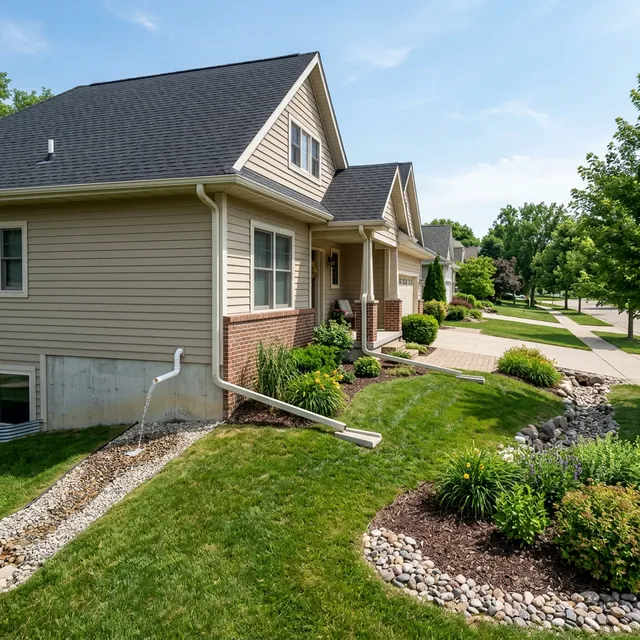
- Improve drainage around your home. Ensure soil slopes away from the foundation, install downspout extensions, and clear gutters regularly.
- Install protective devices. Consider a sump pump with battery backup, a backwater valve to prevent sewer backup, and water alarms for early leak detection.
- Seal entry points. Apply waterproof sealant to foundation cracks and use sandbags or flood barriers at doors and windows during flood watches.
- Raise appliances. Elevate water heaters, furnaces, washers, and dryers off basement floors to reduce water damage.
Who Should Prepare and When
This guide is for homeowners, renters, and landlords across a wide range of flood-prone areas—coastal communities, river basins, low-lying neighborhoods, and anywhere with basements. It is especially important for those in low-lying areas, near rivers or lakes, or with basements. Preparation should start in the dry season (often late fall or winter), when contractors may be more available and ground conditions can permit grading and landscaping. Maintenance tasks like cleaning gutters and inspecting sump pumps should be repeated before snowmelt (where applicable) and after heavy storms[1].
Understanding Flood Risks
Floods can occur rapidly and unexpectedly. Water intrusion in basements can damage infrastructure, contaminate belongings, and lead to mold growth. Standard homeowners insurance often does not cover flood damage, so separate flood insurance may be needed[5] [6]. Even with coverage, insurers expect property maintenance, and claims may be denied if damage results from poor upkeep. Risks vary by location: coastal areas face storm surge, inland areas can see flash floods and river flooding, and many urban areas are prone to stormwater and sewer backup. However, simple actions like clearing gutters or installing backwater valves can significantly reduce damage.
Action Timeline: Today, This Week, This Season
Today
- Identify flood pathways: Walk around your property to spot potential entry points like basement windows, stairwells, doors, or foundation cracks.
- Store documents and valuables: Move important papers, photos, and irreplaceable items to upper floors or waterproof containers. Create digital backups.
- Clean gutters and downspouts: Remove leaves and debris to ensure water drains away from the house.
This Week
- Grade the soil: Ensure the ground slopes away from your foundation at least 5% (about 6 inches over 10 feet). Fill in low spots where water can collect[7].
- Extend downspouts: Install extensions or splash blocks to carry water at least 6 feet away from the foundation[9].
- Install weather protection sealant: Apply waterproofing or crack sealant on basement walls and around window wells.
- Inspect floor drains: Locate basement floor drains, ensure they are not covered, and test by pouring water to confirm proper drainage.
- Purchase sandbags or water barriers: Store them in an accessible location for quick deployment during flood watches.
This Season
- Install or upgrade a sump pump: Ensure your sump pump works and add a battery or generator backup for power outages.
- Add a backwater valve: Hire a licensed plumber to install a backwater valve on your sewer line to help prevent sewage backup.
- Raise utilities and appliances: Place water heaters, furnaces, washers, and dryers on risers or concrete blocks.
- Install water alarms: Place leak detectors near sump pits, hot water tanks, and floor drains to alert when water is detected.
- Upgrade landscaping: Replace impermeable surfaces with permeable pavers or gravel, and plant rain gardens to absorb runoff.
Step-by-Step Flood Prevention Plan
- Assess flood maps and insurance: Check your flood hazard information (for example, FEMA flood maps) and discuss flood and sewer-backup coverage options with your insurance agent/broker[2] [4].
- Improve grading and drainage: Hire a landscaper to grade your yard away from the foundation. Install French drains or swales, and ensure downspouts discharge at least 6 feet from the home.
- Seal and protect openings: Apply waterproof sealant around foundation cracks, window wells, and door thresholds. Install window well covers or flood shields, and use sandbags or barriers during warnings.
- Install sump pump and backup: Choose a submersible pump sized for your pit, add a battery or generator backup, and test it twice a year.
- Backwater valve installation: Hire a plumber to install a backwater valve on your main sewer line, obtaining necessary permits and rebates (if offered locally).
- Add alarms and monitoring: Place water leak detectors near sump pumps and other vulnerable areas, and consider smart systems for alerts.
- Raise and protect utilities: Elevate electrical outlets, circuit breakers, and major appliances above predicted flood levels. Strap fuel tanks and use waterproof storage.
- Maintain and inspect: Schedule biannual inspections to clean gutters, test pumps and valves, check landscaping, and replace worn components.
Decision Points for Different Situations
- Basement vs. slab-on-grade: Basement homes should prioritize sump pumps, backwater valves, and sealing cracks. Slab-on-grade homes need grading and downspout extensions, with focus on door barriers and landscaping.
- Urban vs. rural: Urban properties often benefit from backwater valves and water alarms due to sewer backups. Rural homes should protect septic fields and maintain ditches and culverts.
- Budget considerations: Low-cost improvements include cleaning gutters and adding downspout extensions. Larger investments like sump pumps may need professional installation; seek rebates and funding where available.
- Homeownership vs. renting: Renters should inform landlords about drainage issues, purchase renter’s insurance, and use waterproof containers for belongings.
Recommended Product Families
Sump Pumps
Why it helps: Removes excess water from basement sump basins to prevent floor-level damage. What to look for: Submersible or pedestal pumps rated for basin size, automatic float switch, battery backup or generator compatibility.
Good / Better / Best:
- Good: Basic submersible pump with 1/3 horsepower and plastic housing.
- Better: Cast-iron submersible pump with high flow rate and vertical float switch.
- Best: Dual pump system with primary and battery-powered backup. [Affiliate link: Sump pumps – option A] [Affiliate link: Sump pumps – option B] [Affiliate link: Sump pumps – option C]
Backwater Valves
Why it helps: Helps prevent sewage from flowing backward into the home during heavy rain or sewer overload. What to look for: A code-compliant, appropriately sized one-way valve; transparent/removable cover for inspection; accessible installation.
Good / Better / Best:
- Good: Standard inline backwater valve with basic flapper.
- Better: Valve with locking mechanism and removable clear cover.
- Best: Retrofit backwater valve with integrated cleanout port and alarm sensor. [Affiliate link: Backwater valves – option A] [Affiliate link: Backwater valves – option B] [Affiliate link: Backwater valves – option C]
Water Alarms and Leak Detectors
Why it helps: Early detection of water allows addressing leaks or pump failures before extensive damage. What to look for: Battery-powered or smart Wi-Fi detectors with audible alerts, sensors for basements and appliances, long battery life.
Good / Better / Best:
- Good: Basic alarm with audible siren.
- Better: Smart sensor with smartphone notifications and temperature monitoring.
- Best: Networked system with multiple sensors, mobile alerts, and automatic shut-off valve. [Affiliate link: Water alarms and leak detectors – option A] [Affiliate link: Water alarms and leak detectors – option B] [Affiliate link: Water alarms and leak detectors – option C]
Foundation Sealants
Why it helps: Protects foundation walls from moisture penetration and reduces seepage. What to look for: Elastomeric or epoxy-based sealants for concrete and masonry, below-grade application rating, low-VOC for indoor use.
Good / Better / Best:
- Good: Brush-on waterproofing paint for interior walls.
- Better: Elastomeric membrane that fills hairline cracks.
- Best: Professional-grade two-component epoxy or polyurethane injection kit for structural cracks. [Affiliate link: Foundation sealants – option A] [Affiliate link: Foundation sealants – option B] [Affiliate link: Foundation sealants – option C]
Sandbags and Flood Barriers
Why it helps: Diverts or absorbs water to protect doors, garages, and other entry points. What to look for: Burlap or polypropylene sandbags for flood control, reusable water-filled barriers, carrying handles and stacking capability.
Good / Better / Best:
- Good: Traditional burlap sandbags.
- Better: Polypropylene sandbags with tie strings.
- Best: Reusable water-filled tubes or modular barrier systems. [Affiliate link: Sandbags and flood barriers – option A] [Affiliate link: Sandbags and flood barriers – option B] [Affiliate link: Sandbags and flood barriers – option C]
Downspout Extensions
Why it helps: Directs water away from the foundation to reduce seepage risk. What to look for: Flexible or rigid extensions fitting standard downspouts, length of at least 6 feet[9], durable materials resistant to UV and temperature.
Good / Better / Best:
- Good: Basic plastic extension.
- Better: Flexible corrugated extension with integrated drainage holes.
- Best: Hinged or roll-up extension that can be folded during mowing or winter. [Affiliate link: Downspout extensions – option A] [Affiliate link: Downspout extensions – option B] [Affiliate link: Downspout extensions – option C]
Flood Shields and Door Barriers
Why it helps: Creates a watertight seal over doorways and window wells to prevent water entry during floods. What to look for: Adjustable brackets or panels for doorway dimensions, rubber or neoprene gaskets, lightweight materials for easy installation.
Good / Better / Best:
- Good: Simple removable panel that screws into doorframe.
- Better: Adjustable barrier with compression gasket and quick-clamp mechanism.
- Best: Permanent flood door with built-in seal or automatic deployable system. [Affiliate link: Flood shields and door barriers – option A] [Affiliate link: Flood shields and door barriers – option B] [Affiliate link: Flood shields and door barriers – option C]
Elevation Platforms and Risers
Why it helps: Elevates appliances and storage to reduce water damage. What to look for: Heavy-duty plastic or metal risers for appliances, anti-slip surfaces, adjustable heights, platforms rated for weight.
Good / Better / Best:
- Good: Basic plastic riser for laundry appliances.
- Better: Metal adjustable riser with anti-vibration pads.
- Best: Custom-built concrete platform with integrated drainage. [Affiliate link: Elevation platforms and risers – option A] [Affiliate link: Elevation platforms and risers – option B] [Affiliate link: Elevation platforms and risers – option C]
Home Flood-Prevention Checklist
- Move documents and valuables to higher levels; create digital backups
- Clean gutters at least twice a year[10]
- Ensure soil slopes away from foundation; fill low spots
- Install or extend downspouts to discharge water at least 6 feet away
- Apply waterproof sealant to basement walls and cracks
- Install sump pump and test regularly
- Install battery backup for sump pump
- Install backwater valve on sewer line
- Purchase and store sandbags or flood barriers
- Place water alarms near sump pit, water heater, and drains
- Raise appliances and utilities off the basement floor
- Maintain floor drains; ensure they are clear of obstructions
Common Mistakes and Myths
- “Flooding only happens to coastal homes.†Inland and urban areas can flood from heavy rains, snowmelt, river flooding, or sewer backups.
- “Home insurance covers flood damage.†Standard policies often exclude flood damage; additional coverage may be required[5] [6].
- “Sandbags are enough.†Sandbags are short-term; long-term prevention includes grading, downspouts, sump pumps, and backwater valves.
- “My sump pump is working—I don’t need to check it.†Pumps can fail due to debris or power outages; test regularly and install backup power.
- “Basements will naturally drain.†Without proper drainage and backwater valves, water can accumulate and cause structural damage.
When to Escalate
- Consult a licensed plumber for installing or servicing sump pumps, backwater valves, and waterproofing systems.
- Contact a structural engineer if you notice foundation cracks or persistent water seepage.
- Speak with your insurance agent/broker to understand coverage gaps and additional flood insurance options.
- If water levels rise rapidly or you receive evacuation orders, gather your emergency kit and leave immediately[11].
Sources
- American Red Cross — Flood Safety (Flood Preparedness)
- FEMA — Flood Map Service Center
- FEMA — Search By Address (Flood Map Service Center)
- FloodSmart.gov — The National Flood Insurance Program (NFIP)
- Florida Office of Insurance Regulation — Flood Insurance (homeowners policies typically don’t cover flooding)
- National Flood Insurance Program (NFIP) — Summary of Coverage (Dwelling Form)
- Foundation Fundamentals: Inspecting Load Paths and Water Paths (IRC R401.2 & R401.3) — InterNACHI®
- International Code Council (ICC) — Digital Codes
- Maintaining Proper Drainage Around Your Home (City of Marshfield, WI PDF)
- AmeriPro Roofing — How Gutters Prevent Basement Flooding & Protect Your Home
- American Red Cross — Flash Flooding: How to Stay Safe
- American Red Cross — How to Prepare for Flooding (Press Release)